Problem-Solving on Site: What a Project Manager Actually Catches Before It Costs You
 By Ben Murrell, independent project manager in South West London. Ask me a question →
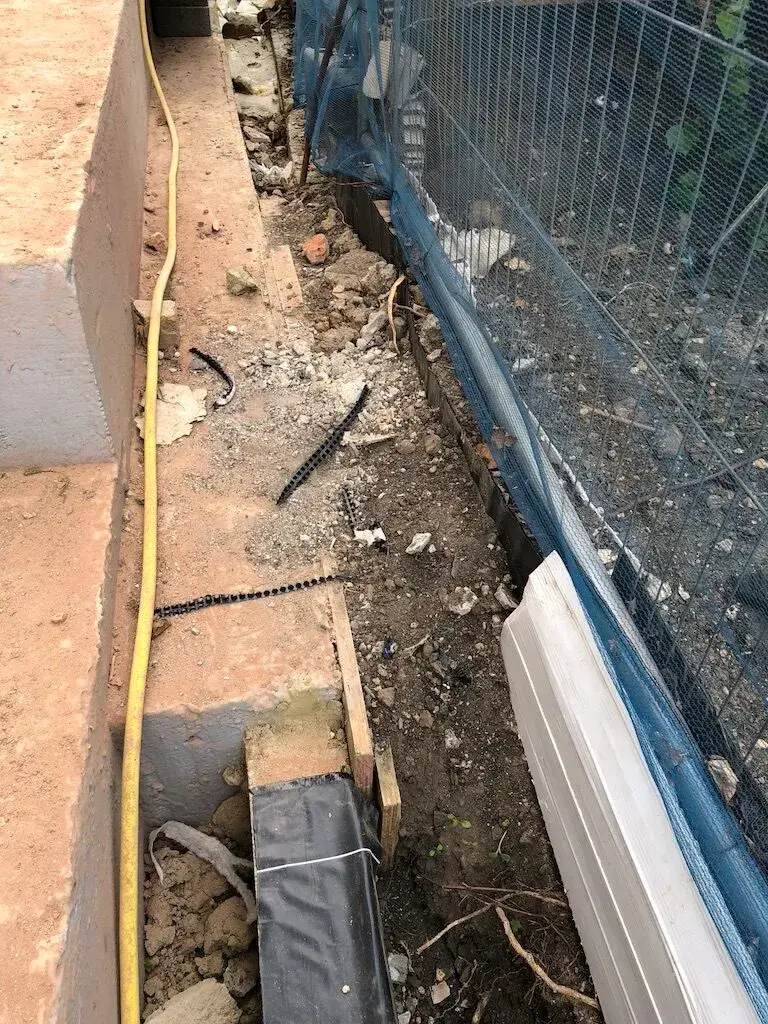
It's easy to describe a project manager's problem-solving as a vague reassurance — "someone experienced keeping an eye on things." In practice, the value shows up as specific, recurring categories of problem, caught at the point where fixing them is still cheap rather than after they've been built over.
Structural surprises found once walls are opened up
Older properties routinely reveal something the original drawings didn't show — an unexpected chimney breast, a wall that isn't where it was assumed to be, or a foundation shallower than the structural engineer's assumption. Caught the day it's uncovered, this is a phone call to the structural engineer and a revised detail. Missed, or worked around informally by a builder trying to keep to programme, it can mean remedial structural work months later — vastly more disruptive and expensive than addressing it on the spot.
Trades working from outdated information
On any project with more than a couple of trades overlapping, it's common for an electrician to first-fix from an earlier kitchen layout, or a plumber to route pipework before a bathroom design change has actually reached them. Someone reviewing the drawing issue against what's happening on site day to day catches this before sockets and pipes are in the wrong place — because moving them after first-fix means opening up finished work rather than a five-minute correction.
Substandard work that isn't obvious to an untrained eye
Insulation gaps, a poorly formed damp-proof course junction, or a structural connection not quite matching the engineer's detail can all look fine to someone without construction experience, and only become visible as a problem — damp, cold spots, a failed building control inspection — months after the work is covered over. Recognising these issues while they're still exposed and correctable is one of the least visible but most valuable things regular, informed site presence provides.
Payment requests running ahead of actual progress
It's common, not necessarily dishonest, for a payment application to describe more progress than has actually happened on site — an estimate rounded generously, or a stage claimed as complete when a final element is still outstanding. Sense-checking each payment request against a physical inspection avoids ending a project having paid for more than you've received, which is very difficult to claw back once paid.
Disputes resolved calmly instead of escalating
Every project has disagreements — over an interpretation of scope, a delay, or the standard of a finished element. Someone experienced in construction, with no emotional investment riding on the outcome, can usually resolve these as a straightforward conversation referencing the contract and the drawings. Left to build up between a homeowner and a builder directly, the same disagreement can escalate into a standoff that stalls the programme or ends up needing a solicitor.
Why this is hard to price in advance
None of this is predictable in the way trade-price savings are — you can't know in advance which project will need which catch, or how expensive the alternative would have been. That's exactly why it functions as insurance as much as saving: most projects have at least one moment where an experienced eye materially changes the outcome, and on the projects where it happens, it typically dwarfs everything else in this series on its own.
The honest summary
Trade pricing and caught quotation omissions are the reliable, calculable part of a project manager's value. Problem-solving on site is the less predictable part — but across enough projects, it's rarely absent, and when it matters, it tends to matter a great deal.