Project Manager vs Architect Contract Administration — Who Controls Your SW London Extension?
 By Ben Murrell, independent project manager in South West London. Ask me a question →
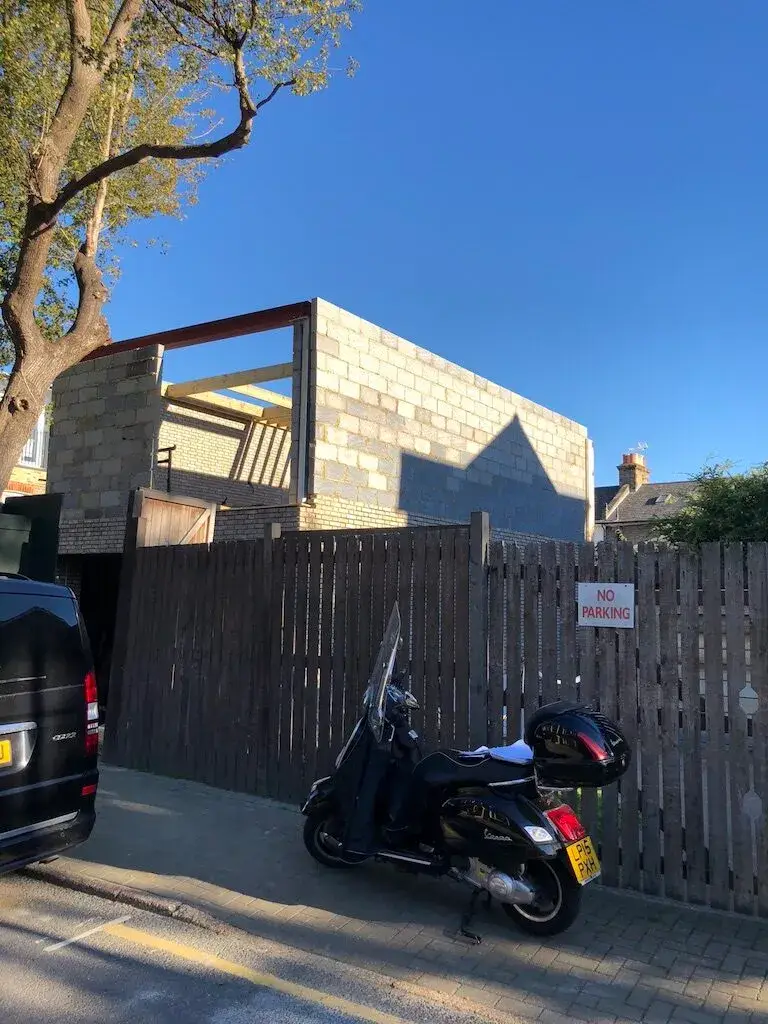
An architect is appointed to design. A client-side residential project manager is appointed to represent the homeowner on cost, programme and the builder. On a London project you often want both. One does not replace the other, and this practice does not provide architectural design or formal contract administration.
When a Wandsworth or Fulham extension leaves planning, homeowners often assume the architect will “run” the build. Sometimes that is exactly right. Sometimes it is a polite misunderstanding that leaves you without a clear client voice once the scaffold goes up.
Architects are trained to design and — under many UK appointments — to administer the building contract. A client-side project manager is appointed by you to protect programme, cost and decision quality on your side of the table. The job titles sound adjacent. The seat at the table is not.
This piece is for SW London homeowners deciding who should control day-to-day build decisions on an extension, loft or renovation — without bashing architects, and without pretending one person can do every role well.
What architects usually mean by “contract administration”
On a traditional appointment, the architect (or another contract administrator) may:
- Issue instructions under the building contract
- Certify payments against valuations
- Assess extensions of time and variations
- Coordinate design information with the structural engineer and specialists
- Inspect works for compliance with the design intent
That is serious, skilled work. It is also not the same as sitting in your seat when a builder’s quote is thin, a provisional sum explodes, or three trades disagree about who owns a delay.
Contract administration is about administering the contract. Client-side project management is about protecting the client’s interests across quotes, site pressure, trade pricing and the sequence of decisions that never appear on a drawing.
For a plain map of who does what, see renovation team roles in SW London.
What a client-side PM actually controls
A client-side PM (as practised at Homeowners Project Manager) typically:
- Stress-tests builder quotations before you appoint — like-for-like scope, exclusions, steels, drainage, scaffold, making-good
- Keeps a live budget and flags drift while you still have choices
- Chases information that would otherwise arrive the week it is needed on site
- Translates site language into decisions you can make without living on WhatsApp
- Holds the builder to the written scope without turning every conversation into a fight
- Steers snagging and handover so “practically complete” means liveable, not merely painted
That is the client-side PM service in practice: appointed by you, paid by you, answerable to you — not a builder’s internal PM with a different logo on the van.
Where the roles overlap — and where they collide
Overlap (healthy): both care about information flow, programme realism and whether the built work matches what was drawn.
Collision risk (expensive):
- Who challenges the price? An architect CA can assess a variation under the contract. They are not always the person who noticed the original quote never priced the temporary works.
- Who owns the programme pressure? Living-in builds in terraces around Wandsworth Common or Fulham’s Victorian streets create soft costs (dust boundaries, temporary kitchens, neighbour relations). Someone has to plan for people, not only for trades.
- Who reads the trade prices? Retail markup on kitchens and bathrooms is rarely a “design” issue. It is a procurement issue sitting on the client’s side.
- Who speaks for you when the builder is also the loudest voice in the room? CA duties assume a functioning contract. Homeowners often need someone who helped shape that contract before it was signed.
None of this means architects should not administer contracts. It means you should not assume CA automatically equals “someone running my build for me as a client.”
When the architect CA is enough
You may be fine with architect-led CA and no separate client-side PM when:
- The job is modest, drawings are complete, and you have already run a proper like-for-like tender
- You have time and appetite to make weekly decisions and read valuations
- The architect’s appointment explicitly includes CA at a level you understand (hours, site visits, response times)
- You are not living in through a heavy strip-out
Honesty matters: many SW London extensions look “simple” on a planning drawing and become messy the week the party wall award, drainage diversion and steel lead times collide.
When a client-side PM should control the client seat
Bring in client-side PM (with or without architect CA) when:
- Quotes already disagree on scope and you need someone to force like-for-like before appointment
- You are dual-income time-poor and cannot be the site’s default decision engine
- The job combines loft + rear/side extension, or full-house work, with multiple consultants
- You are mid-build and feel the programme slipping without a clear recovery plan
- You want trade-price discipline on finishes without turning the architect into a buyer
On fees and engagement shapes (percentage, fixed, retainer, day rate), read renovation project manager cost — no fixed price list pretending every terrace is identical.
Can you have both?
Yes — and on larger or more delicate jobs that is often the calmest answer.
- Architect (and SE) own design quality and, if appointed, contract administration
- Client-side PM owns your commercial and logistical interests: tender quality, site rhythm, budget visibility, snagging pressure
They should talk to each other. They should not pretend to be each other.
A worked example of end-to-end client-side control on a loft is the Wandsworth loft conversion case study. For a whole-house period renovation in Fulham, see period-house renovation Fulham.
A simple decision test
Ask yourself three questions:
- Who is paid to protect me if the cheapest quote is cheap because of omissions?
- Who will still answer the phone when a steel date moves and the temporary roof is already open?
- Who is reading the provisional sums as carefully as the elevation?
If the honest answer is “me, at midnight, after work,” you do not necessarily need a bigger design team — you may need a clearer client-side seat.
Control of an SW London extension is not a trophy. It is a responsibility. Architects bring design and, often, contract administration. A client-side project manager brings your side of the commercial and site reality. Choose deliberately. For how architect fees are typically structured (drawings-only vs full service, no compulsory scale), see architect fees UK & London.If you want a straight read on your drawings and quotes, enquire or call — there is no fee for the first conversation, and if you mainly need an architect or a better builder, I will say so.